

Before getting startedThis article is most relevant if you’re building or editing custom layout packs. If you’re using gallery layout packs without modifications, Descript manages visual roles automatically. Not sure what a layout pack is? Start here →
Available visual roles
Change a file’s visual role
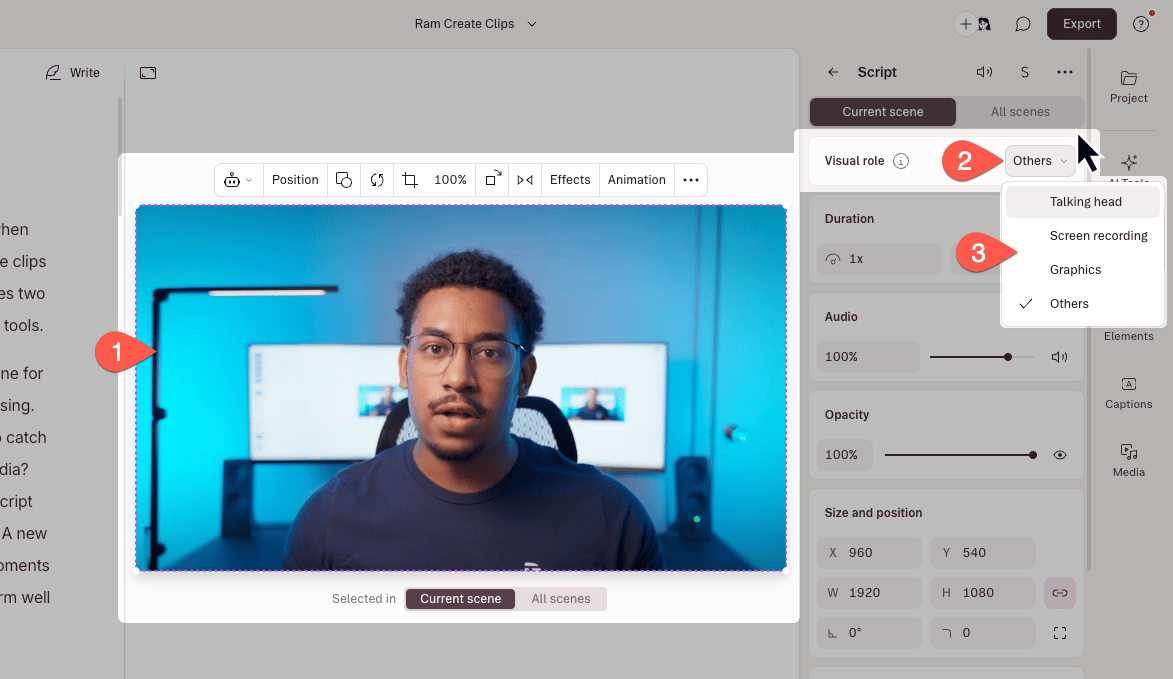
Change a file’s visual role from the project files menu or from the layer properties panel.- In the scene editor, select the layer to update.
- The Properties panel will open in the right-hand sidebar.
- Find the Visual role setting and choose a role from the dropdown.
Tips and limitations
- Descript treats avatars as Talking Head by default — you don’t need to set this manually.
- Visual roles apply to media layers. Text layers and other non-media layers don’t have a visual role.
- Changing a file’s visual role from the project file actions menu updates the role at the file level. This affects how the file is treated whenever it’s added to a scene.
- Locking bypasses matching entirely and preserves the layer as-is whenever a layout is applied. Learn about locking layers.