

Usage noteOn current plans, transcription is not tracked or metered. Legacy and Sunset plans, however, still track transcription hours.If you’re on a Legacy or Sunset plan, see Understanding your Legacy and Sunset plan for details.
How to transcribe files
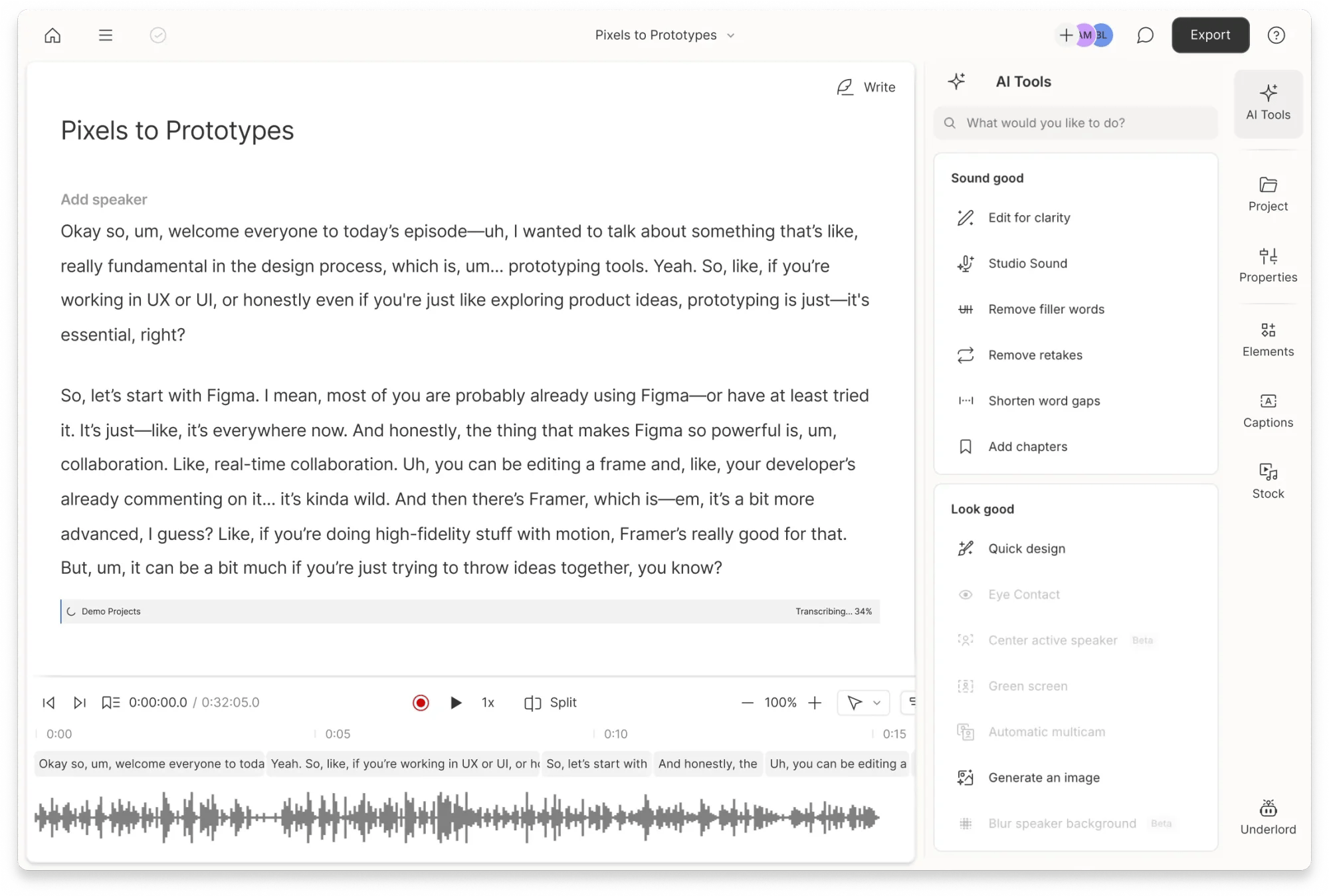
Automatically transcribe a file in Descript in a few ways:- Add the file to your script: Drag and drop files into the Script editor, or insert files from your Project panel.
- From the Project panel: Click the options menu next to a file name, then select Transcribe file.
- When creating a sequence: Import files directly into a sequence; they’ll be transcribed automatically.
Transcription settings
Transcription accuracy depends on your audio quality, the AI model processing it, and whether Descript recognizes the words in your content. Adjust these before transcribing for the best results, or re-transcribe sections that need a second pass.Accuracy
Descript uses third-party AI models that we test and monitor for quality. Accuracy varies based on recording quality, accents, background noise, mic placement, overlapping speakers, and your transcription model. With clear audio, accuracy can reach up to 95%.Transcription model and language
By default, Descript selects the transcription model that works best for most content. To change it, open App Settings > AI models and choose a model next to Transcription under Core. Each model has unique strengths—some are faster, some handle punctuation better, and others may perform better for non-English speech or proper nouns. If you work with multiple languages, turn on Always ask before transcribing or set your Default transcription language before transcribing your content.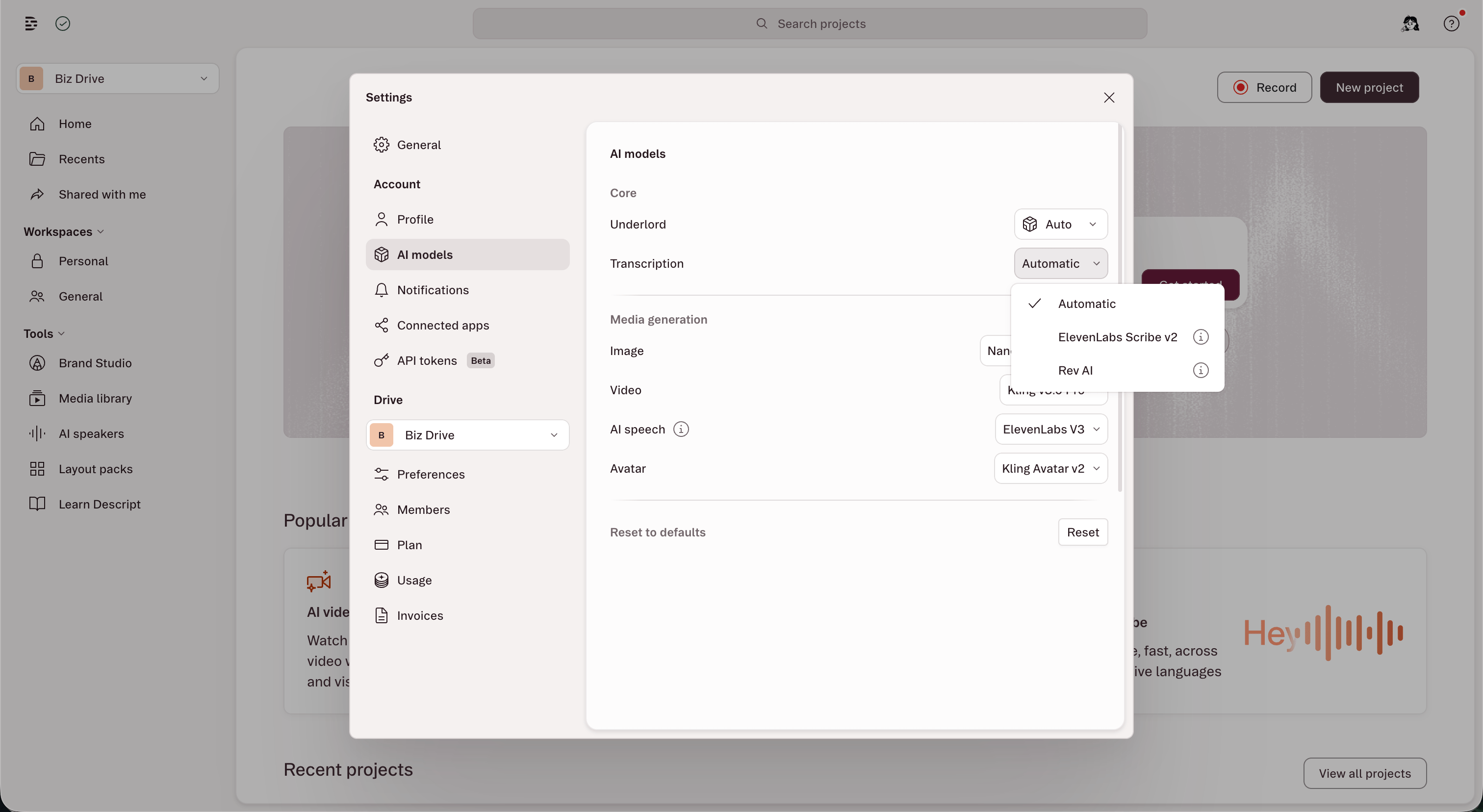
For specialized words, use Descript’s transcription glossaryIf your content includes proper names, brand terms, technical jargon, or other words Descript may not recognize, add them to your transcription glossary before transcribing. The glossary helps Descript recognize those terms more accurately in future transcripts.
Limitations
- File size and duration. The maximum file size limit depends on your plan. Any file longer than 15 hours will fail to transcribe automatically. Large files may also slow down uploads or cause delays in your project. For best results, split large files into smaller segments before uploading.
- Music and song lyrics are not supported. Descript only transcribes speech.
Troubleshooting transcription
If transcription does not start, gets stuck, appears inaccurate, or falls out of sync with your audio, try the steps below.Transcription is not starting or is stuck
Transcription is not starting or is stuck
To fix this:
- Make sure imported or recorded files have finished processing and uploading to the cloud. Monitor file syncing from the app.
- Re-upload the original file with Replace file. This does not affect your content edits.
- Check that your internet connection is stable.
- Check the Descript status page for any ongoing issues.
Transcript is inaccurate or words are missing
Transcript is inaccurate or words are missing
For general quality issues, review the guidance in Transcription settings. If the transcript still needs repair, open the file options menu and select Re-transcribe.After re-transcribing, use Correct your transcript to fix any remaining misspelled words, missing words, punctuation, or speaker label issues.
Transcript is in the wrong language or mixed languages
Transcript is in the wrong language or mixed languages
This can happen if automatic language detection selects the wrong language, or if your default transcription language doesn’t match the audio.To fix this, open the file options menu, select Re-transcribe, and choose the correct language instead of Auto.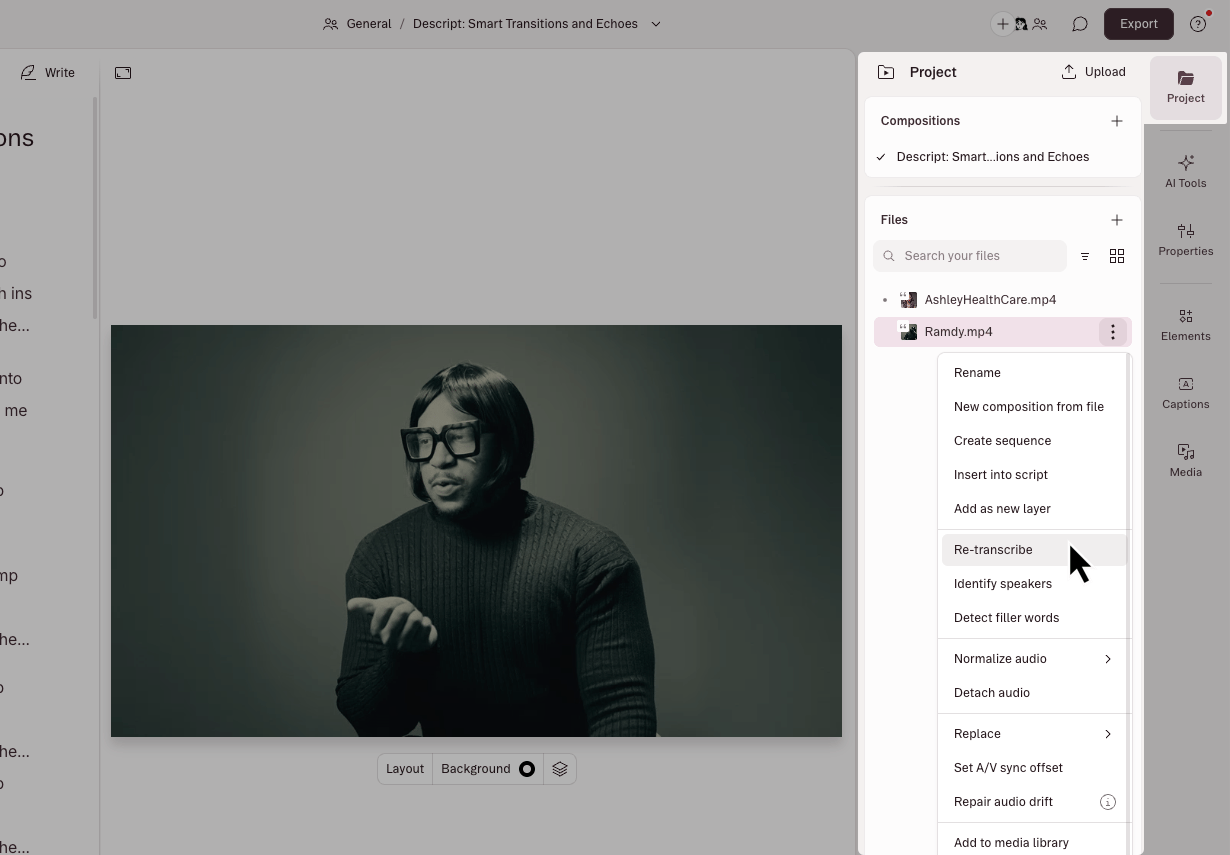
Transcript appears broken up, out of sync, or misaligned
Transcript appears broken up, out of sync, or misaligned
Misalignment can show up as skipped words, overlapping phrases, timing mismatches, red underlines in the script, corrections that disappear, or speaker labels that do not stick. It can also cause tools like Remove filler words to clip the wrong audio.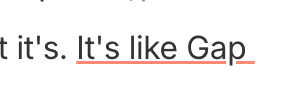
- If working in a sequence, open the sequence and check that your tracks are aligned.
- If your sequence has multiple tracks with the same speaker, exclude extra tracks from the script.
- Correct the transcript manually to fix individual words or phrases.
- Use The Wordbar or Re-align words in range to adjust word timing.
- Re-transcribe the file if alignment problems continue.
- If you see solid red underlines, go to Help > Debug > Force Fix Corrupted Alignment.
The finalized transcript is blank or missing sections
The finalized transcript is blank or missing sections
A blank or partially missing transcript can happen when a stereo source file has significant phasing or delay between the left and right channels.For audio files:
- Open the Project panel.
- In Files, open the file options menu and select Separate into mono files.
- Preview the new files to find the clearer channel.
- Open that file’s options menu and select Transcribe file.
- Leave the other file un-transcribed.